Urban Planning

Development Strategies for People
We are committed to applying European planning concepts and policies and management for sustainable mobility adapted to the specific conditions of Romanian cities.
The urban environment needs a paradigm shift in applying efficient mobility solutions that include all forms of transport.
An integrated approach regarding the implementation of multi-fund projects is necessary to solve highly complex problems through a single integrated project.


Sustainable Urban Mobility Plans
Sustainable urban mobility represents a paradigm shift regarding urban transport, with emphasis on environmental protection, reducing conventional energy consumption, pollution reduction and promoting green energy sources.
Thus, sustainable urban mobility projects become a reliable solution with major impact in configuring a clean urban environment.
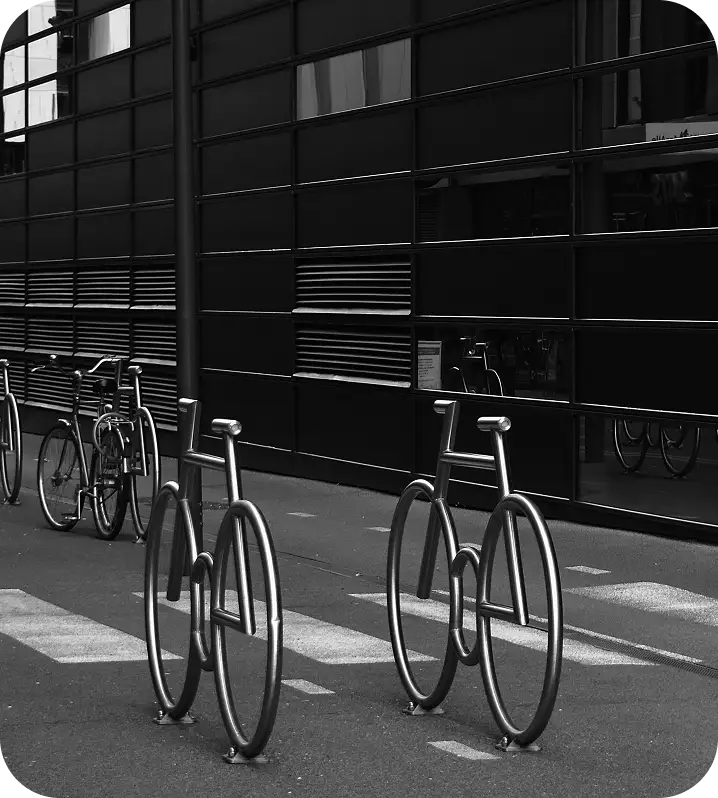
An unconventional solution is urban cycling projects (bike sharing) which benefit from mature technologies and are successfully implemented in most developed European cities.
Urban mobility completes territorial planning
An effective urban plan integrates mobility solutions that connect communities. From road systematisation to public transport, mobility is the dynamic component of planning.
What purpose does it serve?
To ensure performance conditions, the urban mobility plan needs to be correlated with the integrated urban development strategy with the general urban plan (PUG), with regional strategies, with sectoral service strategies: social, health, education, job creation and economic development, as well as with the national transport plan.

Why is it important?
Increasing urban and interurban mobility are main themes of the European Union. In this context, the implementation of intelligent transport systems becomes one of the priorities that can be financed from non-reimbursable European funds.

Intelligent Transport Systems
Intelligent public transport systems are part of the Smart City/Smart Mobility concept, with technology evolving so that they incorporate the necessary equipment to constantly communicate with users through software applications installed on mobile communication devices.

Urban Mobility Initiative
Over 70% of EU citizens live in cities that generate 23% of total greenhouse gas emissions from transport. The strategy for sustainable and smart mobility emphasizes the need for interurban and urban mobility to become more sustainable, smarter, and healthier.

Provisions until 2025
The new urban mobility initiative complements the proposal to revise the guidelines for the trans-European transport network (TEN-T revision). The proposal stipulates that all major cities in the network must develop a sustainable urban mobility plan by 2025.

Challenges and Solutions
The main challenges of smart cities regarding urban mobility are related to environmental pollution and the long time citizens spend in traffic to get to work or other areas of interest.

What purpose does it serve?
To ensure performance conditions, the urban mobility plan needs to be correlated with the integrated urban development strategy with the general urban plan (PUG), with regional strategies, with sectoral service strategies: social, health, education, job creation and economic development, as well as with the national transport plan.
Why is it important?
Increasing urban and interurban mobility are main themes of the European Union. In this context, the implementation of intelligent transport systems becomes one of the priorities that can be financed from non-reimbursable European funds.
Intelligent Transport Systems
Intelligent public transport systems are part of the Smart City/Smart Mobility concept, with technology evolving so that they incorporate the necessary equipment to constantly communicate with users through software applications installed on mobile communication devices.
Urban Mobility Initiative
Over 70% of EU citizens live in cities that generate 23% of total greenhouse gas emissions from transport. The strategy for sustainable and smart mobility emphasizes the need for interurban and urban mobility to become more sustainable, smarter, and healthier.
Provisions until 2025
The new urban mobility initiative complements the proposal to revise the guidelines for the trans-European transport network (TEN-T revision). The proposal stipulates that all major cities in the network must develop a sustainable urban mobility plan by 2025.
Challenges and Solutions
The main challenges of smart cities regarding urban mobility are related to environmental pollution and the long time citizens spend in traffic to get to work or other areas of interest.

Action Plans for Renewable Energy
The Sustainable Energy and Climate Action Plan (SECAP) is a visionary document that sets the levers of interest in meeting the future challenges of climate change and their more dramatic effects that scenarios bring year after year.
These plans establish concrete objectives for reducing carbon emissions and promote the use of renewable energy sources at the local level.
The implementation of SECAP contributes to the sustainable development of communities and to improving the quality of life of citizens.


Smart City Strategies
Why are they necessary?
The need for a Smart City Strategy lies in the fact that the smart city is a very dynamic concept, a process of continuous transformation through technological, urban and managerial innovation, a series of steps through which cities become more livable and resilient, and implicitly more able to respond quickly to new challenges that arise.
What are smart cities?
A smart city is a community in which the main functions are approached in an intelligent/smart manner, such as: smart economy, smart buildings, smart mobility, smart infrastructure, smart technology, smart energy, smart education and health, tourism.


Urban regeneration brings development plans to life
Urban planning identifies potential, and urban regeneration transforms it into reality. Our regeneration projects revitalise degraded areas and create spaces for the community.

Urban Planning Documentation
What is their utility?
Urban planning documentation transposes at the level of urban and rural localities the proposals contained in the national, zonal and county territory planning plans. Thus, all interventions at the urban level must comply with the proposals of the urban planning documentation, according to the approvals of local public authorities.
Types of urban planning documentation
The main types of urban planning documentation used in urban planning are the general urban plan (PUG) and its local regulation, the zonal urban plan (PUZ) and its local regulation, and the detailed urban plan (PUD).