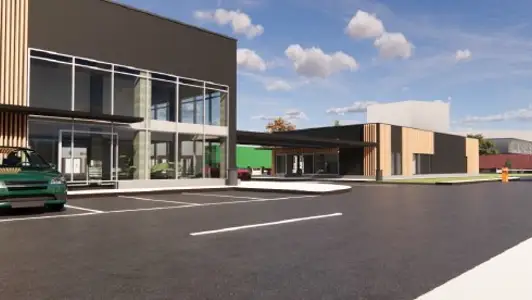
Voluntary Collection Centre for Urban Agglomerations
Construction of a voluntary drop-off collection centre in Buzau Municipality, designed for the integrated management of recyclable waste from urban agglomerations.
Year
2021
Location
Buzau Municipality
Area
8,500 sqm
Category
Civil Construction
Context and Investment Rationale
Waste management represents one of the major challenges for local administrations in Romania, within the framework of obligations assumed through European directives on the circular economy. Buzau Municipality, with a population of approximately 115,000 inhabitants, identified the development of selective collection infrastructure as a strategic priority within the Waste Management Plan.
The voluntary drop-off collection centre was designed as a modern facility, intended for receiving and preliminary sorting of recyclable waste brought directly by citizens. The feasibility study substantiated the optimal siting of the centre, taking into account road accessibility, distance from residential areas, and compliance with environmental regulations.
The total investment value amounts to 42 million RON, encompassing the construction itself, specialised equipment procurement, and the development of the access platform.
Architectural and Construction Approach
The collection centre was designed across a built area of 8,500 sqm, utilising a mixed structure of reinforced concrete and steel. The main sorting hall, covering 2,400 sqm with a clear height of 8 metres, houses the automated sorting line and temporary storage zones for recyclable materials.
The two-storey administrative building includes office spaces for operational staff, changing rooms, a waste composition analysis laboratory, and a training room. Facades were finished with sandwich panels with metallic cladding, integrating natural ventilation elements and zenithal lighting.
The access platform was dimensioned to permit simultaneous circulation of freight transport vehicles and citizens' personal cars, with flow separation through physical barriers and corresponding signage.
Construction Phases
Project execution was planned across three successive phases. The first phase encompassed infrastructure works: earthworks, foundations, utility networks, and the access platform. The second phase included the structural framework and building enclosures, along with the assembly of the sorting hall's prefabricated steel elements.
The final phase targeted technical installations, sorting equipment, and interior fit-out. The automated sorting line, with a processing capacity of 15 tonnes per hour, includes a magnetic separator, optical separator, and baling press.
Final acceptance confirmed the compliance of works with technical documentation and adherence to quality standards imposed by the specifications.
Outcomes and Impact
The collection centre serves a catchment area of approximately 60,000 inhabitants, making a significant contribution towards achieving the recycling targets established by national legislation. Annual processing capacity is estimated at 12,000 tonnes of recyclable waste, of which approximately 85% undergoes material recovery.
The project created 35 direct employment positions and generated a multiplier effect on the local economy through supply contracts for recovered materials with regional recycling operators. Operational monitoring indicates a 10% exceedance of initial selective collection targets in the first year of operation.
Gallery

Discover how our Civil Construction services made this project possible
This project demonstrates our team's expertise in delivering integrated solutions. Explore the full range of services or discuss a similar project with our team.